ABOUT
THE OM LAB

The Om Lab is a space for movement, nervous system awareness and self-connection.
Here, ancient wisdom meets modern life - through yoga, sound and education.
An invitation to slow down, tune in and move with understanding.
MEET
JANINA
Teacher & Founder
Yoga has been part of my life for over fifteen years. What began as a physical practice gradually became a lifelong exploration of movement, breath, philosophy, meditation and sound.
After years working in the corporate world, I chose to follow a different path and dedicate myself fully to the study and teaching of yoga. Since then, I have completed 550 hours of Yoga alliance certified teacher trainings in Tenerife, Goa and Ubud. I actively teach Hatha, Vinyasa, Yin, Yoga Nidra, Meditation, Pranayama and sound healing. Together, these practices cultivate strength, awareness, softness and presence.
Through The Om Lab, I hope to create a welcoming space where yoga is explored with curiosity rather than perfection - whether you're stepping onto the mat for the first time or deepening an established practice.
LAB METHODS
Exploring Yoga
in Three Dimensions
ANATOMY ✦ PHILOSOPHY ✦ SOUND
At The Om Lab, yoga is explored mainly through three interconnected methods. Together, they unite the science of anatomy, the wisdom of philosophy and the transformative power of sound into one integrated practice.
01
ALIGNMENT & ANATOMY
.
Alignment is more than external form. It is the art of understanding how the body moves, breathes and stabilises itself with intelligence. Through anatomical awareness, movement becomes safer, more efficient and deeply embodied. Rather than forcing the body into shapes, we learn to work with its natural design.
Our Alignment sessions break down postures with precision and clarity, helping you build confidence, refine technique and develop a sustainable personal practice.
DID YOU KNOW?
Straight legs aren't always better!
Many practitioners believe that keeping the legs completely straight in a forward fold is the "correct" expression of the pose.
In reality, limited hamstring mobility often shifts the movement into the lower back rather than allowing it to originate from the hips. As a result, the upper back rounds, the pelvis becomes restricted, and unnecessary stress is placed on the lumbar spine.
A gentle bend in the knees allows the pelvis to tilt naturally, creating space to fold from the hips while maintaining length through the spine.
At The Om Lab, we prioritise intelligent movement over aesthetic shapes - because alignment begins with function, not appearance.
WORKSHOP
STEADY AND ALIGNED
PRACTICE ✦ PRESENCE ✦ PRECISION
02
HISTORY & PHILOSOPHY
Yoga is more than movement - it is a philosophical tradition shaped over thousands of years. Rooted in the Vedic tradition and refined through texts such as the Yoga Sutras, yoga offers a framework for understanding the mind, the body and our relationship with the world. Rather than asking only how we practise, philosophy invites us to ask why.
Our Philosophy sessions explore yoga's historical roots alongside its timeless teachings, helping ancient wisdom become relevant to modern life.
THE FIRST YOGI
According to tradition, the Hindu God Shiva is known as Adiyogi - the first yogi. Disguised as Nataraja- the Lord of the Dance - he embodies the rhythm of creation, transformation and stillness.
His cosmic dance reminds us that yoga is not the pursuit of perfection, but the continual balance between movement and awareness.
In our Philosophy immersions, these stories become living teachings rather than distant mythology.
03
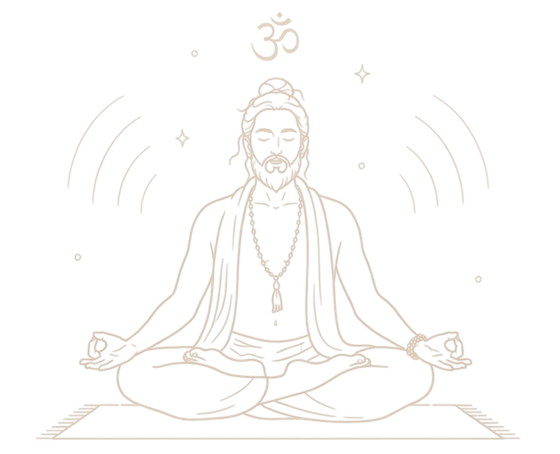
NAAD - THE YOGA OF SOUND
Naad or Nada Yoga explores sound as a pathway to awareness. Long before modern sound healing, yogic traditions understood vibration as a bridge between body, breath and consciousness.
Whether through mantra, singing bowls or subtle frequencies, sound becomes an invitation - not something to achieve, but something to receive.
HEALING VIBRATIONS
Research on sound and music suggests measurable effects on heart-rate variability, a marker of autonomic nervous-system activity. This supports the use of sound alongside breath, movement and meditation as part of practices designed to encourage regulation and rest.
Sound is experienced not only through the ears, but through the entire body. Carefully selected instruments create frequencies that invite the nervous system into rest while supporting deep presence and regulation.
There is nothing to perform and nothing to fix.
Simply listen.
Simply receive.